🎵 Audio guide
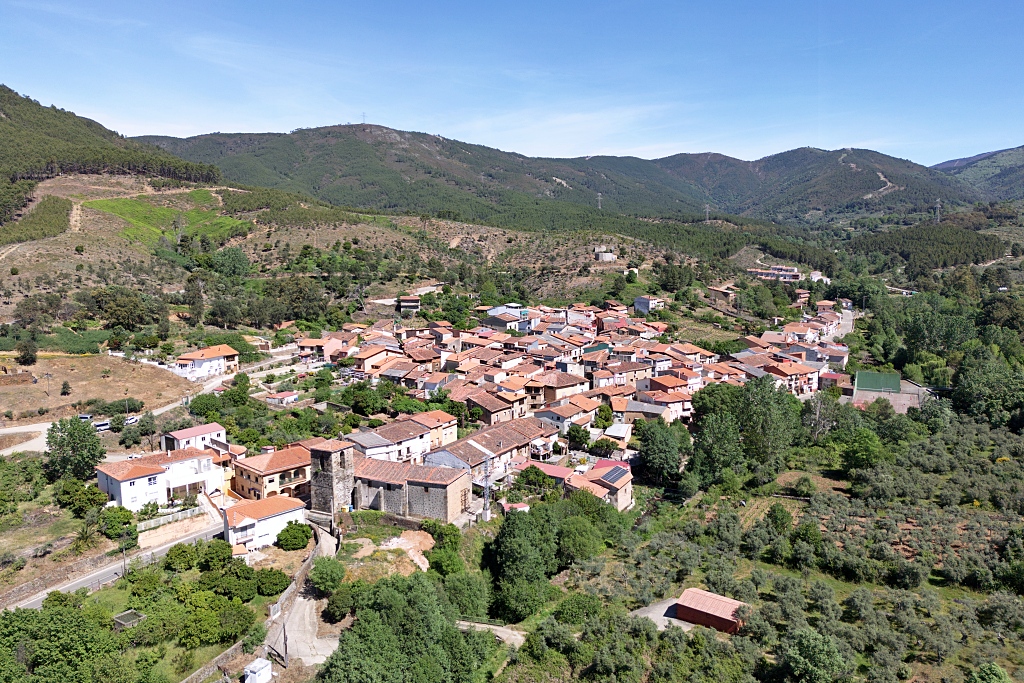
Descargamaría lies in a sunny spot in the Árrago valley next to the river itself which flows through its municipal area between the Sierra de las Pilas to the west and the Sierra de los Ángeles in the east. The valley formed by its high mountains made it, in times gone by, synonymous with a rest stop on the trade route to the Kingdom of Castile.
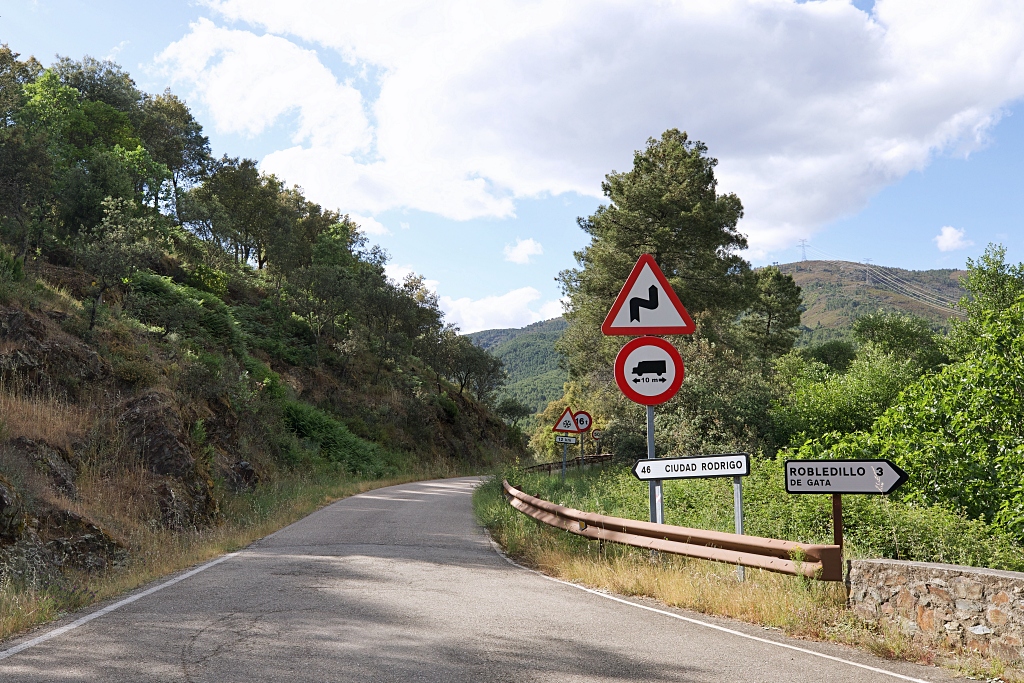
The disappearance of nearby hamlets such as Puñoenrostro increased the importance of Descargamaría. Its proximity to the Puerto Viejo, the mountain pass which leads to Ciudad Rodrigo, made it a trading post for both sides of the Sistema Central mountain range which led to it being known for its wines as early as the 15th century.

These lands have been inhabited since ancient times and, since the bronze age, many civilizations have passed through and left their mark, their traditions and their culture. It was famous for its gold mines in the Roman era but its written history doesn't start until 1212 when Alfonso IX definitively took control of the Sierra de Gata.
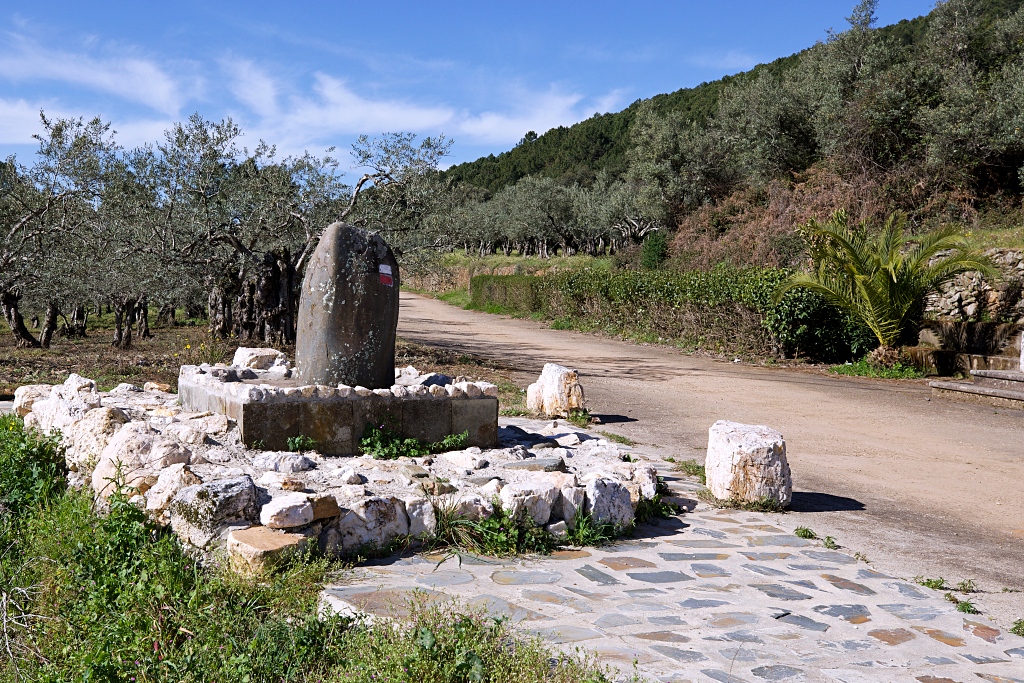
Descargamaría formed part of the Señorio de Valdárrago, along with the villages of Robledillo de Gata and Puñoenrostro. It belonged to the Pacheco family of Ciudad Rodrigo before passing to the Marquisate of Monroy. It was part of Salamanca province until 1833 when it became part of Caceres province.

The street layout is typical of a linear village. Calle Real is the backbone of Descargamaría and runs parallel to the Árrago river. It is bound to the east by the river, to the south by the church and to the north by the Ermita del Santo Cordero. The rest of the village is composed of various streets which climb up the hillside to the west.
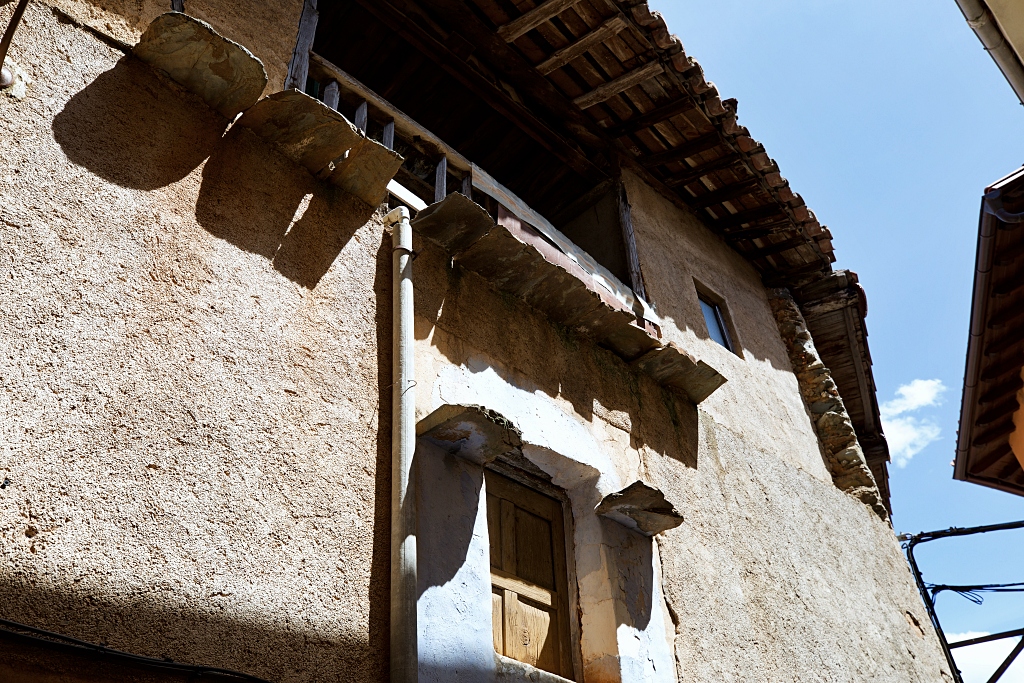
The village, like others in the Sierra de Gata, has undergone a radical transformation. Nevertheless, the oldest part still has beautiful examples of traditional architcture: stone houses with adobe and timber framework, some of which are whitewashed and some which are not; some houses built over the streets; the long sunny balconies with their wide overhanging roofs; as well as many impressive details of stonework, carpentry and metalwork.

Descargamaría's surroundings are as diverse as its geography. Part of the mountains which surround it, where pine trees and scrubland form a dense cover, has been designated a Special Protection Area under the conservation of wild birds directive. The foothills are occupied by olive orchards and vineyards planted on high stone terraces, and Mediterranean vegetation interspersed with pine woods. The river area is a Site of Community Interest where olive groves, vineyards, vegetable gardens and fruit orchards share the space, alongside the riverside forest which forms a green canopy over the river.
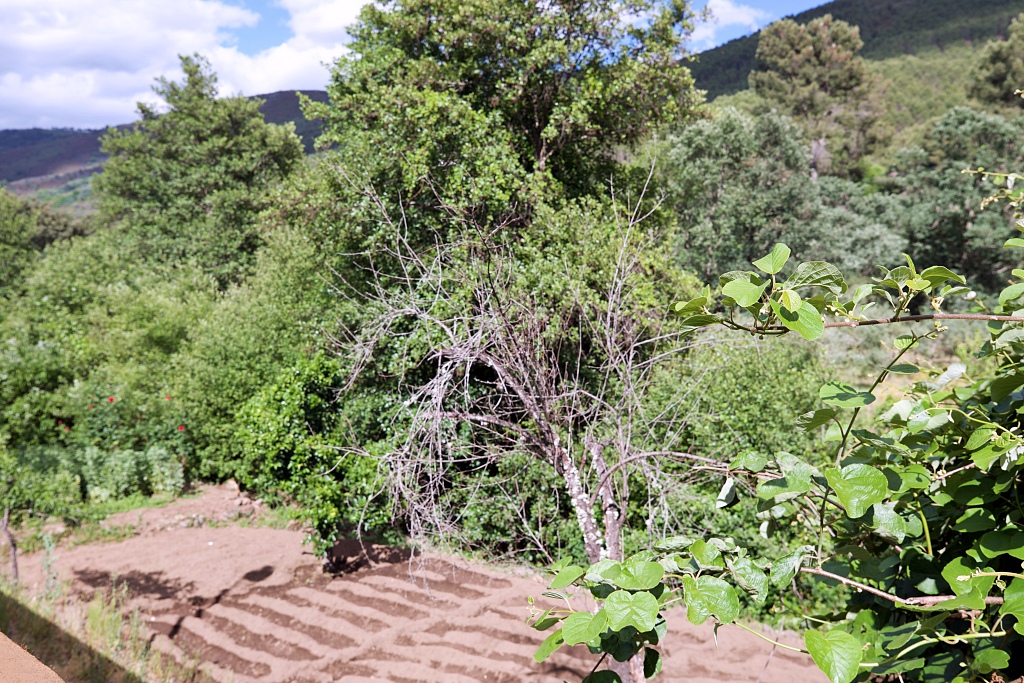
The foothills are occupied by olive orchards and vineyards planted on high stone terraces, and Mediterranean vegetation interspersed with pine woods. The river area is a Site of Community Interest where olive groves, vineyards, vegetable gardens and fruit orchards share the space, alongside the riverside forest which forms a green canopy over the river.

The Pino Marro celebration is one of the cultural highlights, where the locals, visitors and tourists join forces in a traditional ritual.