🎵 Audio guide
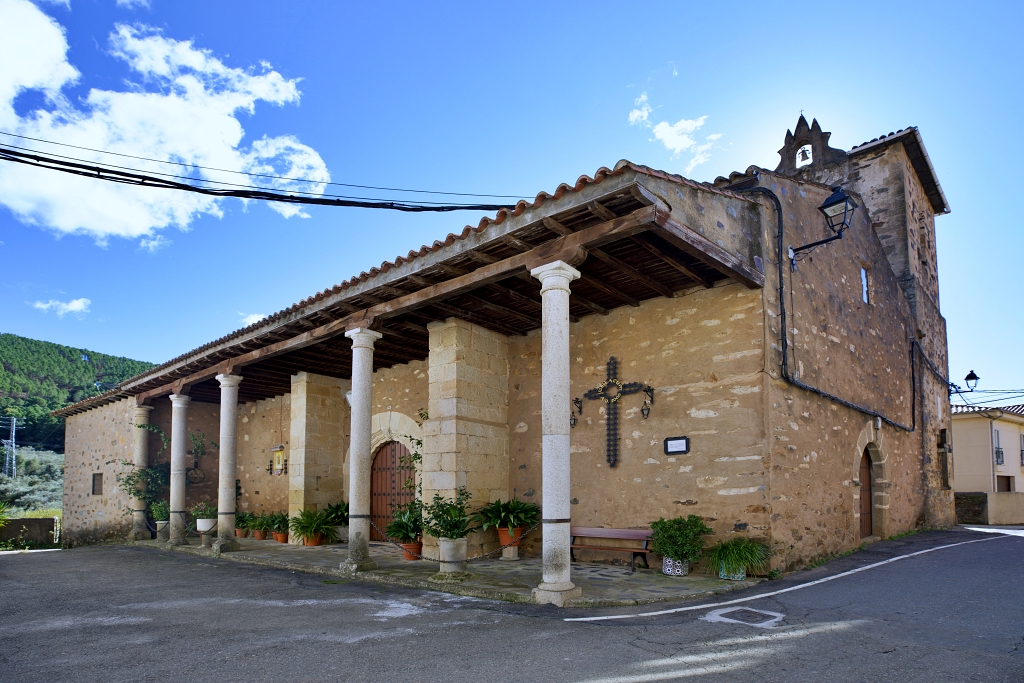
The Church of San Julián Hospitalario, dating from the late 15th and early 16th century, is constructed in slate masonry with granite ashlars, standing out within Descargamaría by its position at the entrance to the village and its characteristic single-nave design.
The rectangular nave has a gable roof and is divided into three sections by buttresses. On the north side, a beautiful Renaissance atrium with a wooden roof supported by four slender granite columns shelters the entrance.
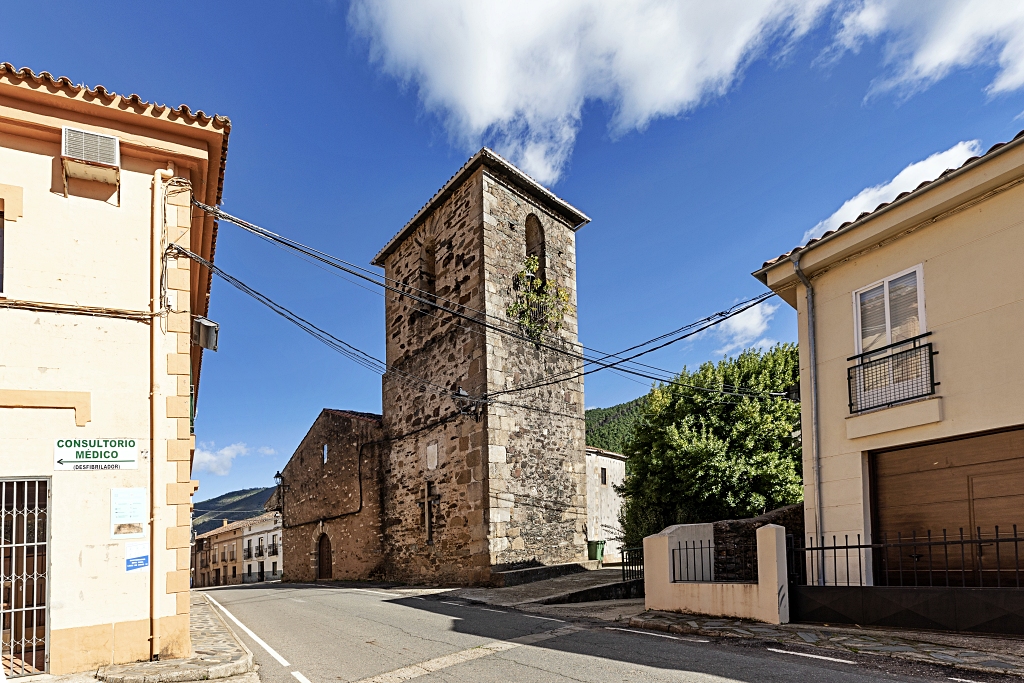
The belltower is aligned with the facade and is composed of two sections. The lower section is solid and without openings, while the upper bell chamber has four round-arch openings. The four-slope roof is interrupted on the north by a graceful espadana.
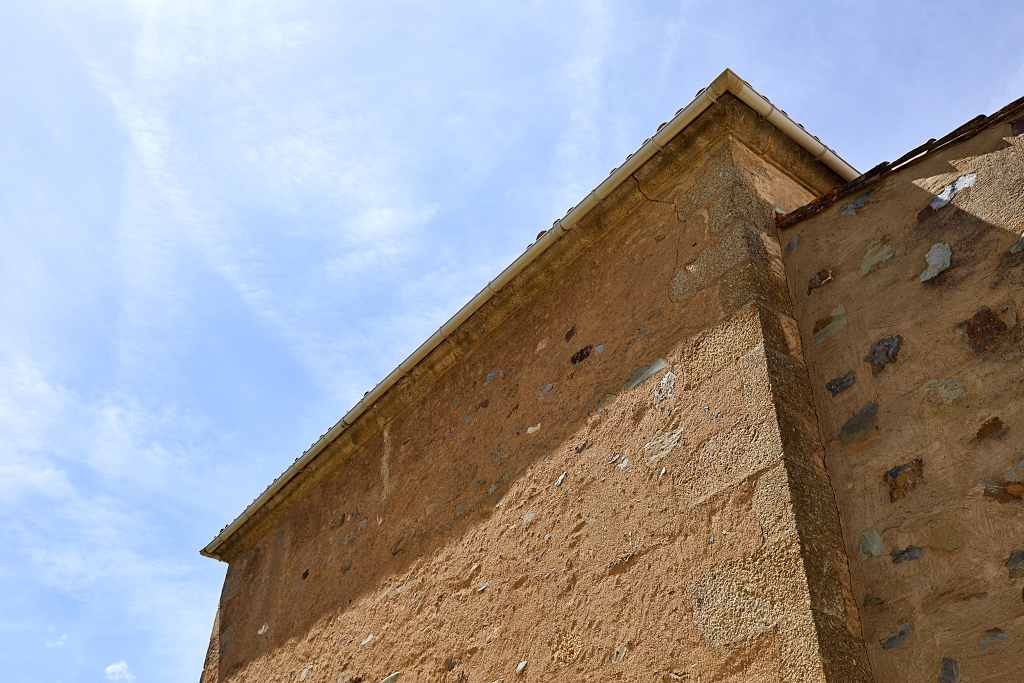
The gable-roofed chancel is narrower than the nave and has a flat east wall, constructed without buttresses and linked on the north side to the sacristy.
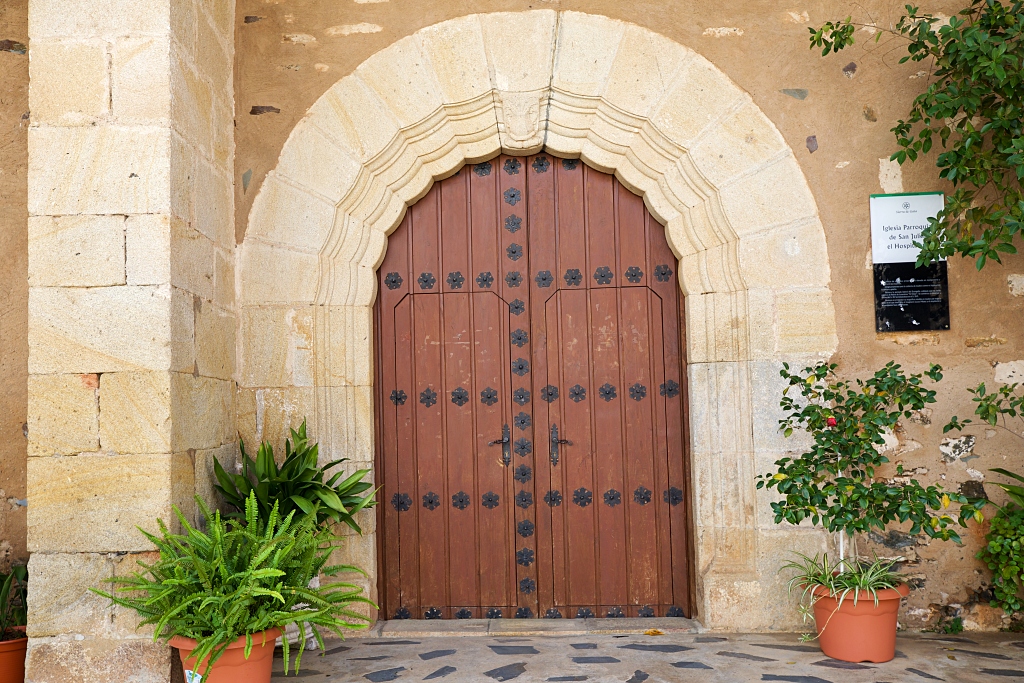
The church has two entrances: one in the facade, formed by a small round arch; and one on the north side, protected by the magnificent 16th century atrium with its large, beautifully decorated voussoirs.
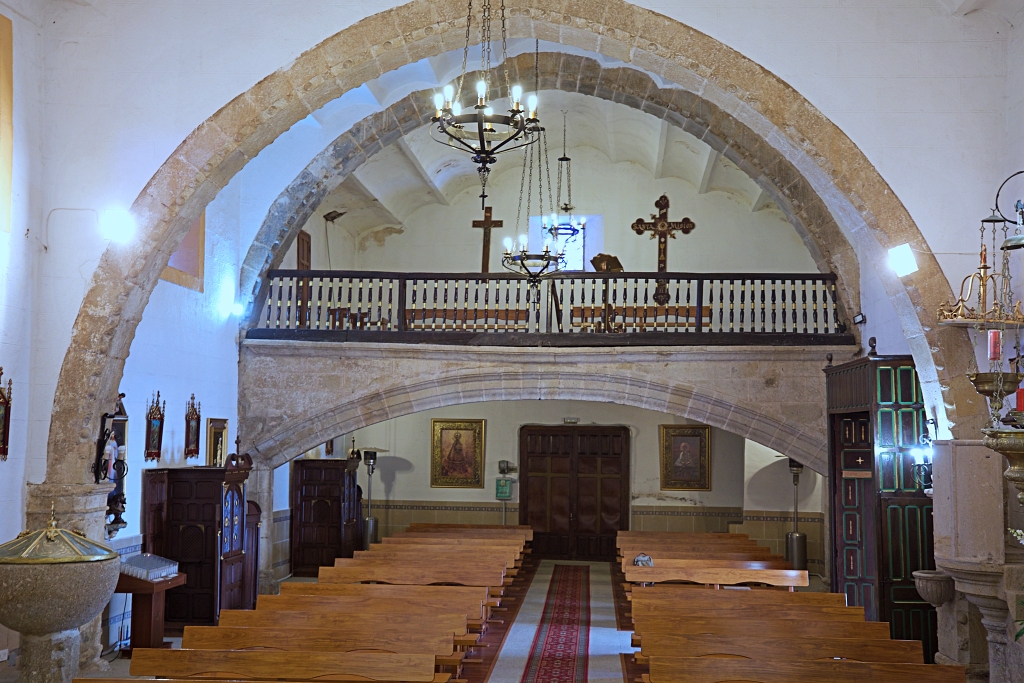
Entering the church from beneath the portico, we find ourselves in the central part of the nave between two gothic pointed arches with decoration typical of the late 15th century.
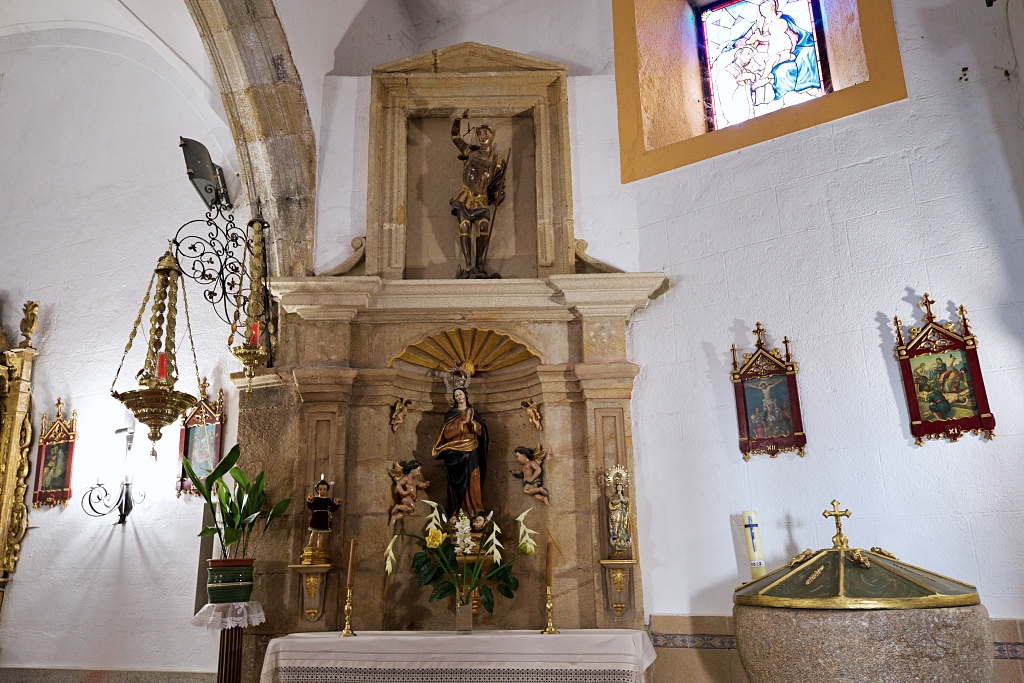
At the threshold of the main chapel there are two Renaissance altarpieces, from the late 16th century, made of finely carved granite.
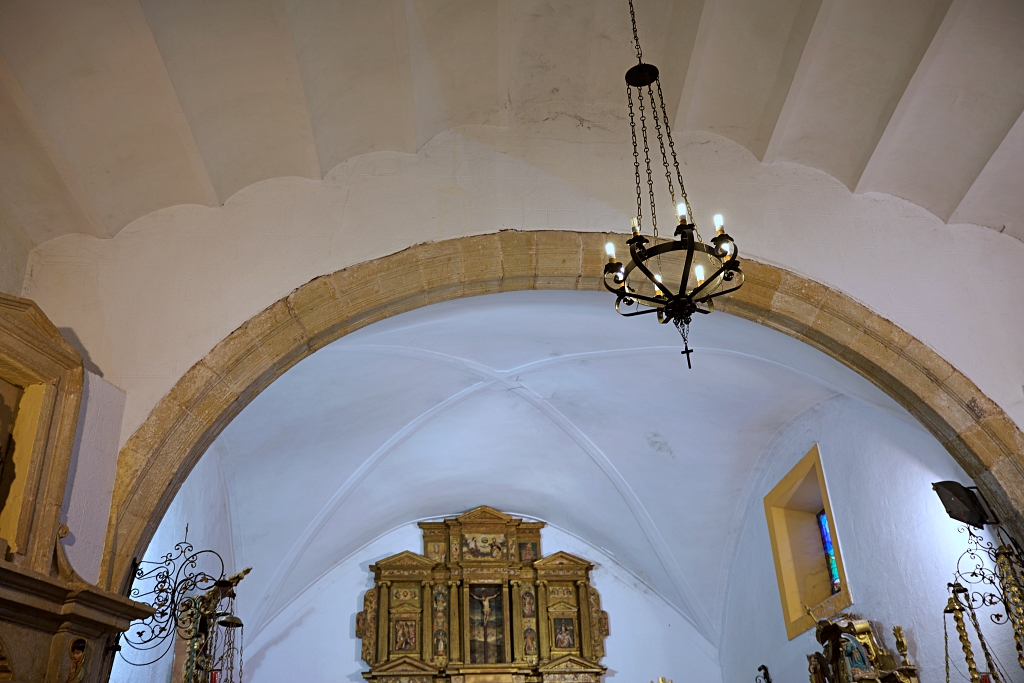
The main chapel is roughly square and separated from the nave by a round triumphal arch, covered with a whitewashed brick groin vault.
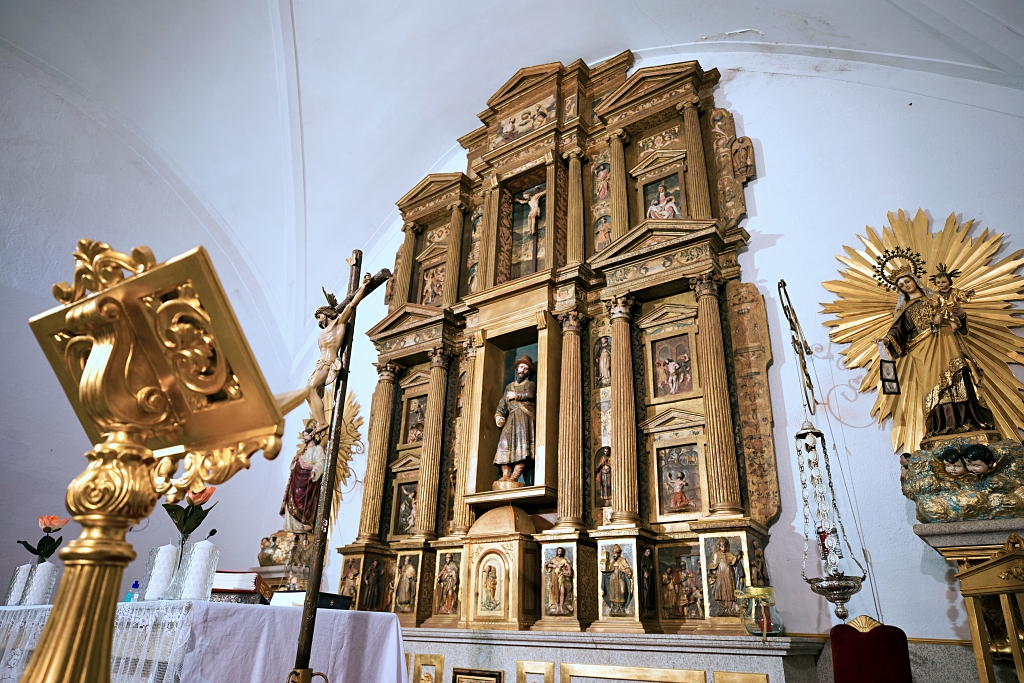
The main altarpiece, dating from the end of the 16th century, consists of a predella and two tiers, crowned with a triangular pediment. The central niche houses San Julián el Hospitalario.
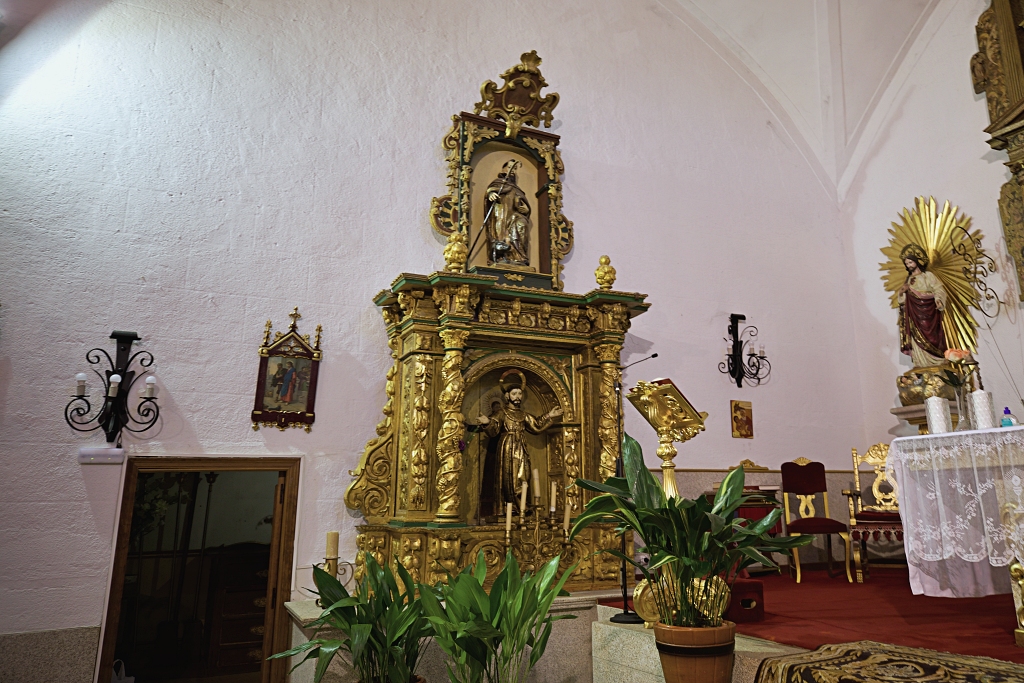
On the north side there is a classical altarpiece with solomonic columns, from the end of the 17th century, which houses the patron saint of Descargamaría, San Cayetano.