🎵 Audio guide
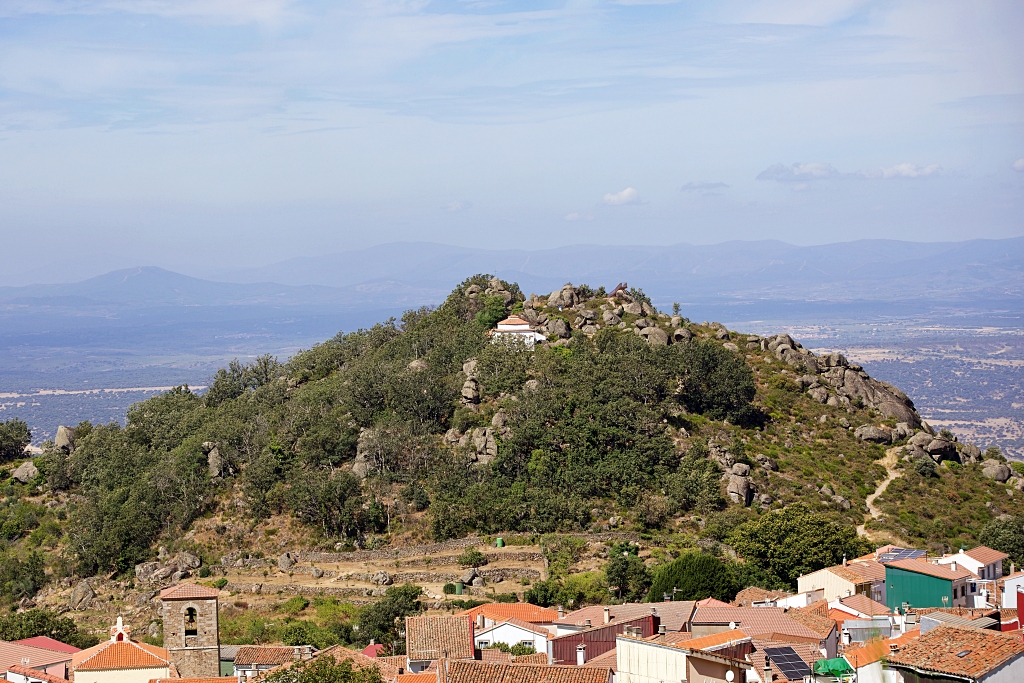
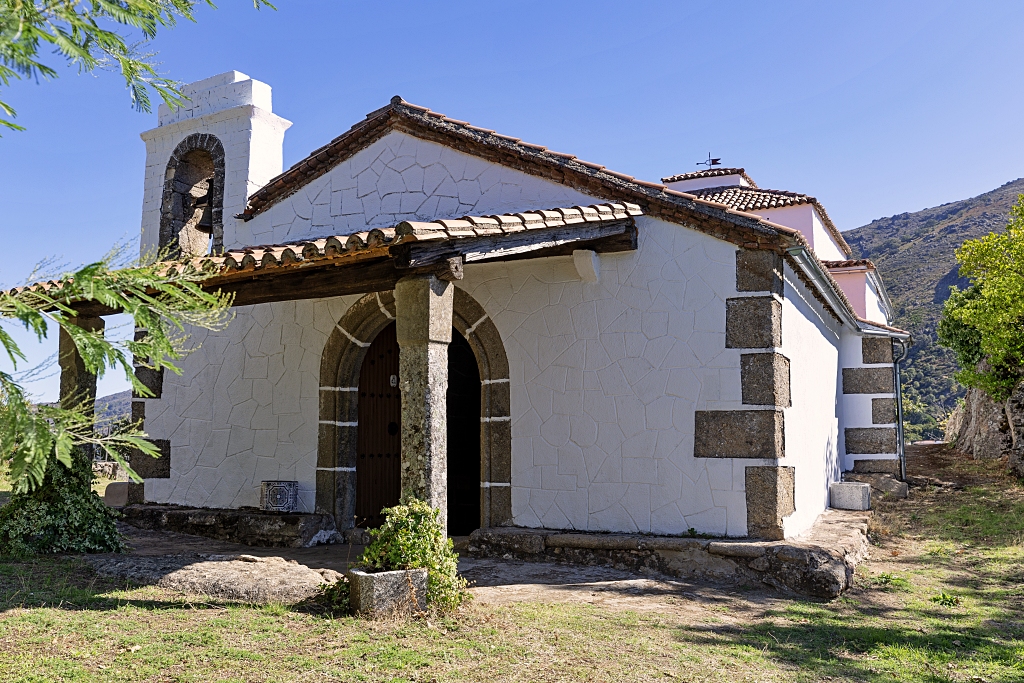
The chapel of Nuestra Señora del Castillo (Our Lady of the Castle) sits in a sheltered spot halfway up the hill known as both Cerro del Búho and Cerro del Castillo. Its whitewashed walls stand out from the surrounding green of the oak trees and ochre grey of the granite boulders. According to legend, the location of the chapel was chosen by the Virgin herself.
The chapel, which has views to the west, is situated on a small terrace next to the track which leads to the summit where the Cabezabellosa viewpoint is located. It is surrounded by huge granite boulders which perfectly complement this 18th century construction.
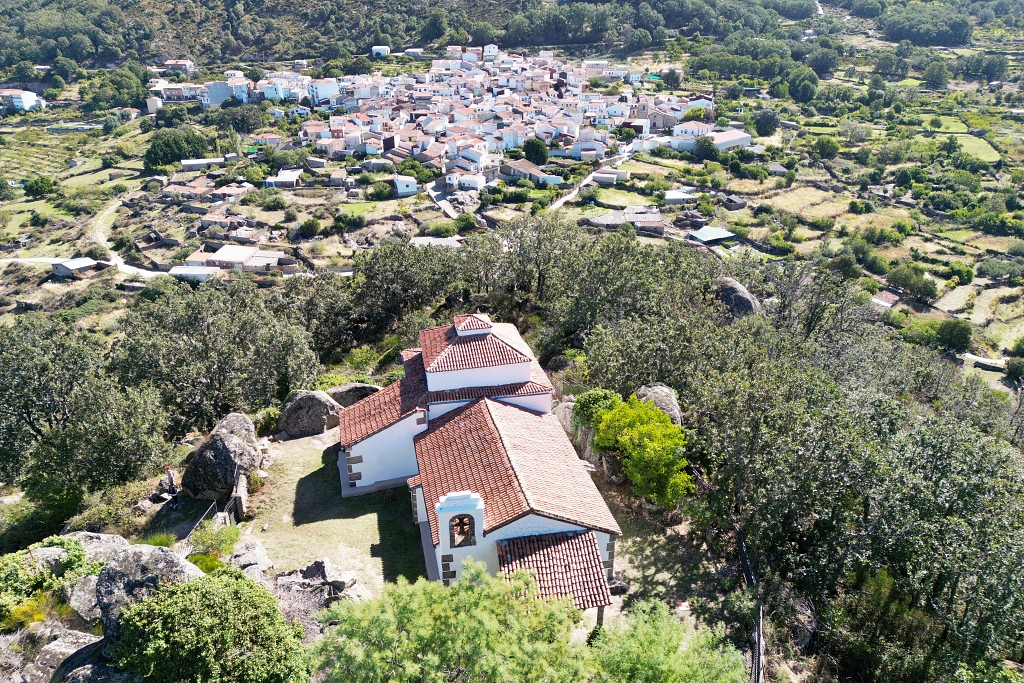
It is a small building, built in whitewashed masonry with ashlar used in some features such as the corners, the bell gable and the door and window openings. It consists of a rectangular nave, a square chancel and a small sacristy at the side.
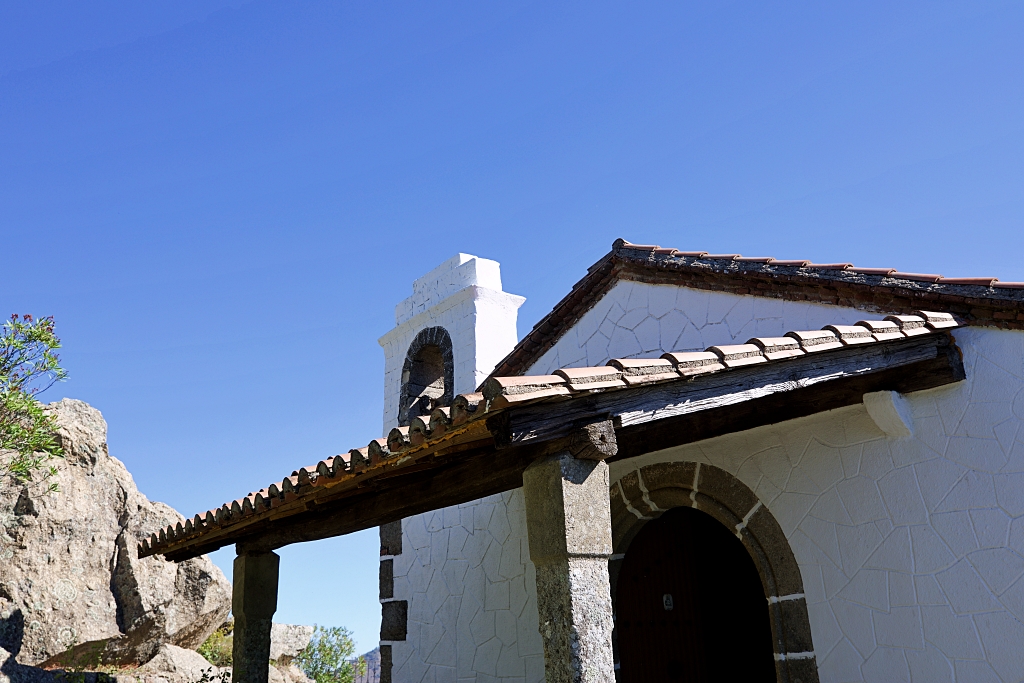
In front of the entrance to the nave, there is a stone porch whose roof is supported by a wooden structure resting on two granite columns. On the north side of the facade there is a small bell gable.
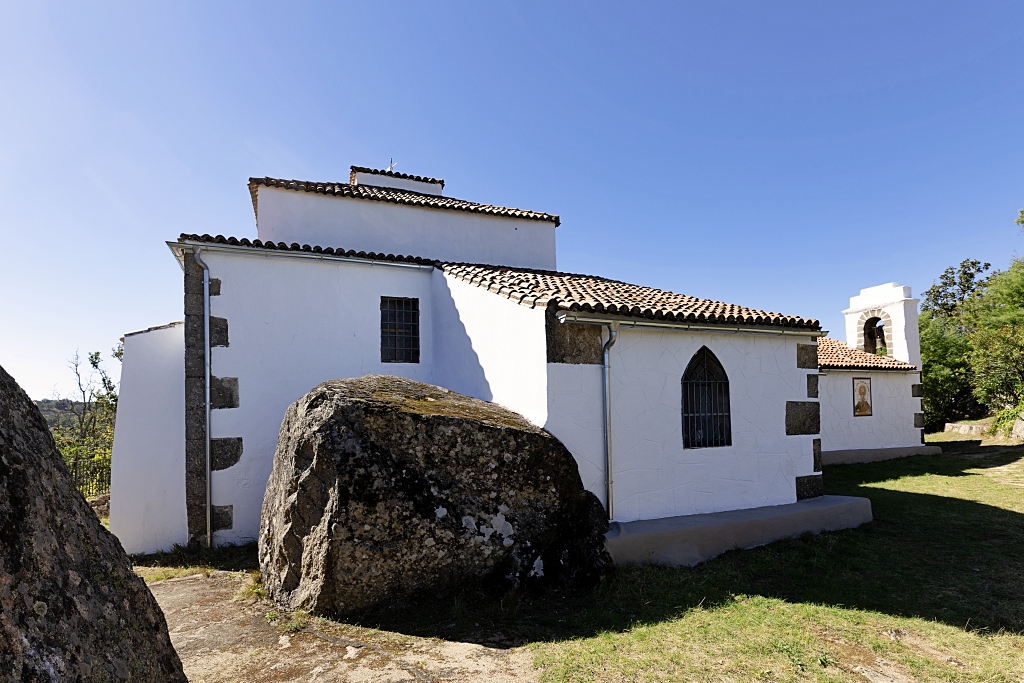
The square chancel is higher than the nave and has two buttresses on the end wall. In the centre of the hipped roof there is a square tower similar to a crossing tower which is crowned with a smaller square structure which mirrors its design. On the north (Gospel) side there is a small sacristy with a single-pitched roof.
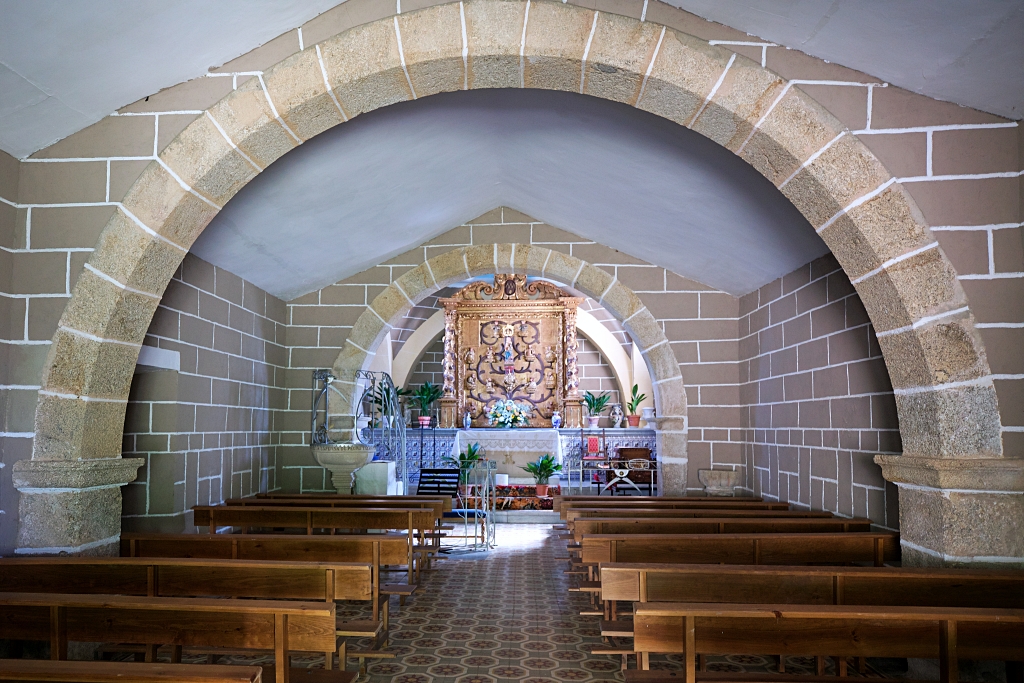
The interior of the nave is simple, with the walls plastered in lime in the same style as the church, in imitation of ashlar blocks. The space is divided in two by a large round arch supported by pilasters which was required to support the original wooden roof structure which no longer exists.
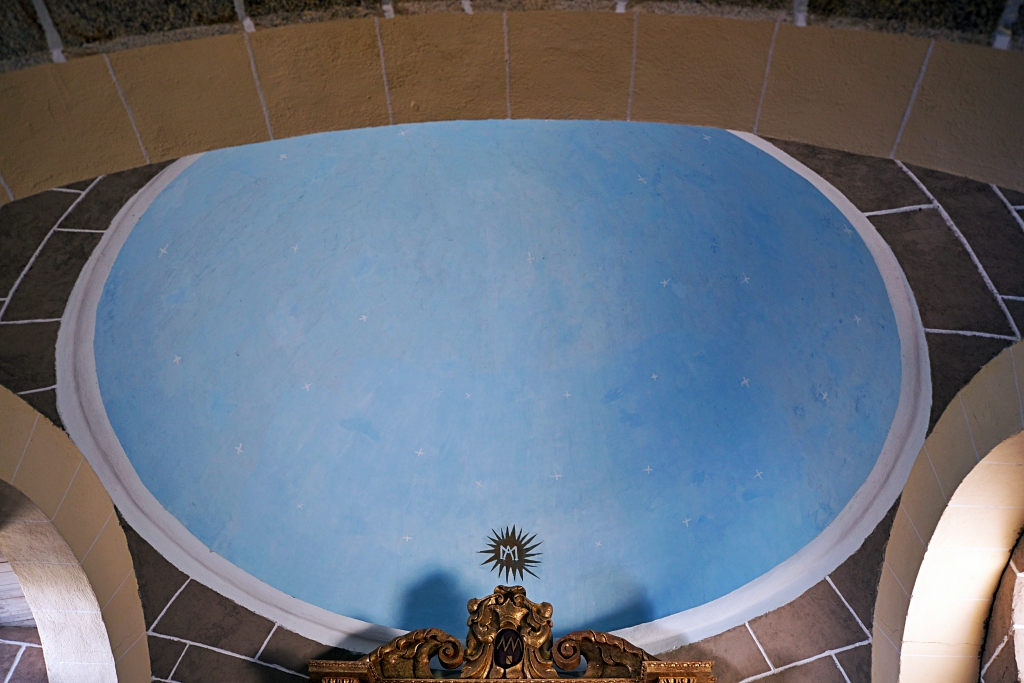
Access to the main chapel is through a small ironwork gate located under the round triumphal arch which is of the same design as the arch in the nave. Light enters from two windows on the side walls, illuminating the pendentive dome which rests on four substantial arches. This is similar to the design of the dome in the parish church but herethere isn’t an oculus.
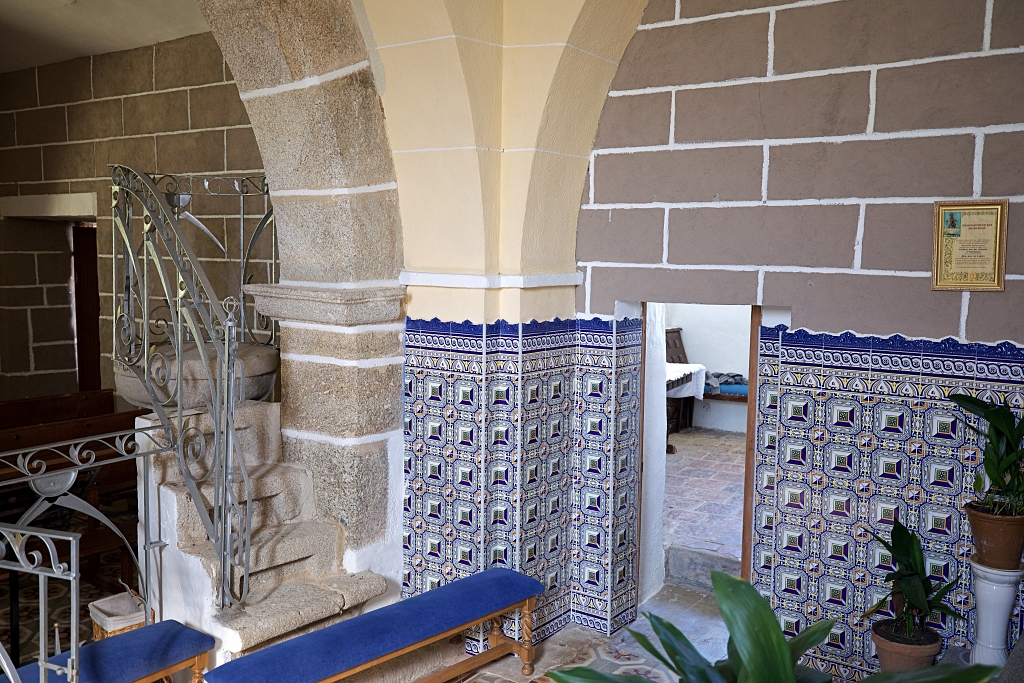
A beautiful altarpiece sits on a tiled stone bench. The same decorative tiles are used on the side walls of the main chapel. Although the original pulpit has been replaced by a more modern one, the stone steps leading up to it are the original steps.
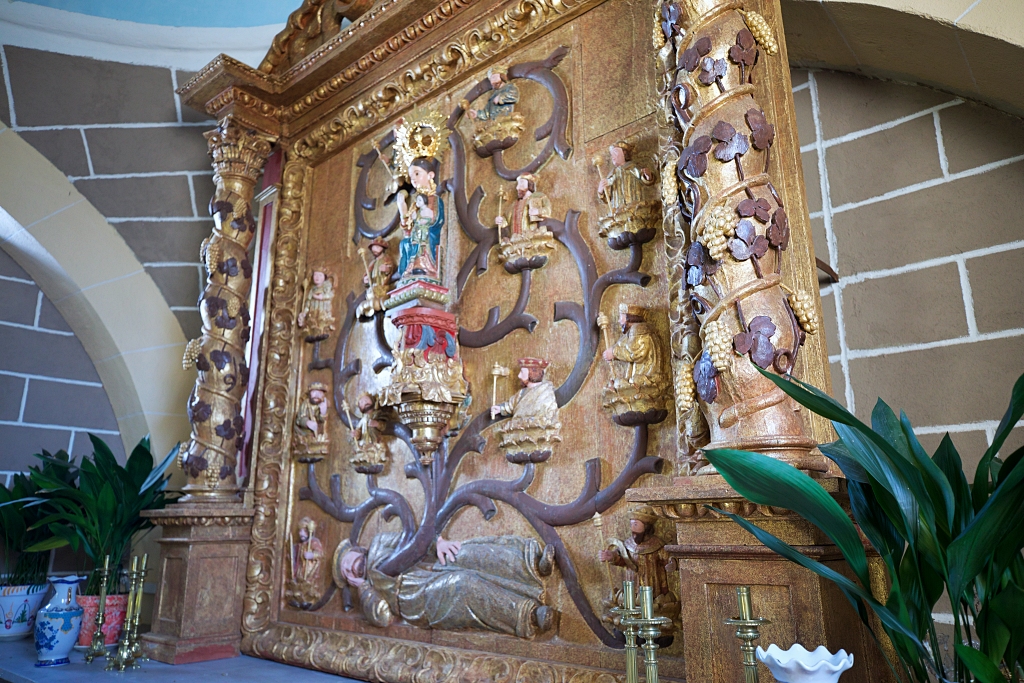
The beautiful 18th century altarpiece is a polychromatic wooden structure with two Solomonic columns which flank a panel depicting the Tree of Jesse or the genealogy of Christ. The columns are joined by an entablature and crowned with a beautifully decorated pediment.
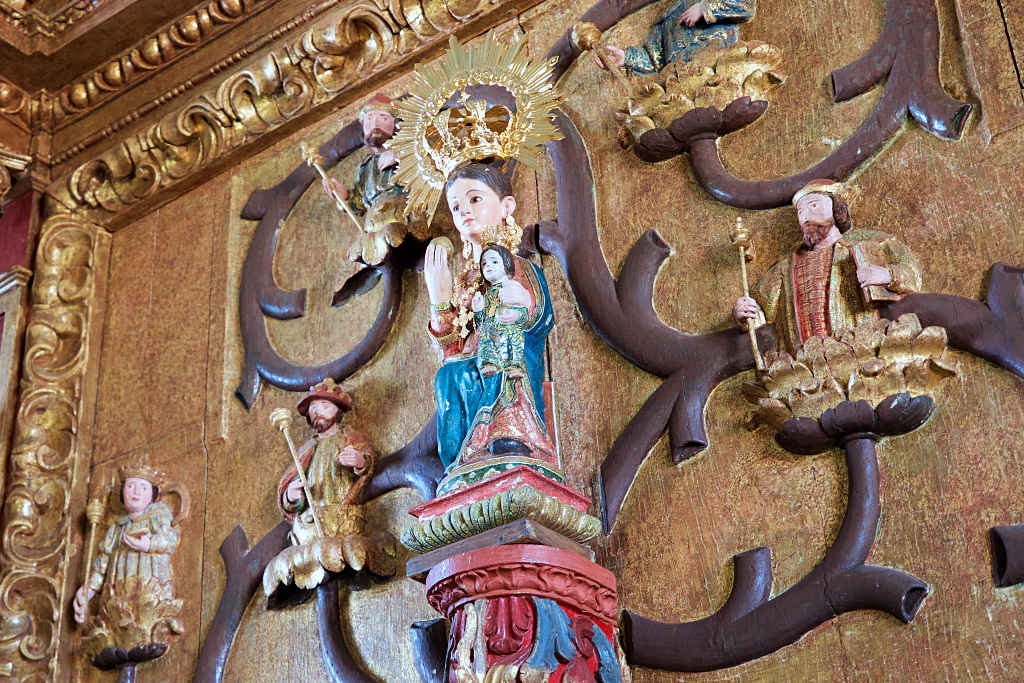
A polychrome carving of artistic merit representing the Virgin of the Castle occupies the central part of the altarpiece. In this image she is seated with a child on her lap.